When people think about giving birth in South Korea, they usually picture advanced hospitals, excellent healthcare, and modern technology. But there’s another uniquely Korean system that often surprises foreigners even more: the Postpartum Care Center, known in Korean as Sanhujoriwon (산후조리원).
If you’ve ever watched videos or read discussions about Korean childbirth on YouTube, TikTok, Instagram, or Reddit, you’ve probably seen comments like:
“Wait, Korean mothers stay in a recovery center for two weeks after giving birth?”
“They get professional newborn care, meals, massages, and parenting classes?”
“Why doesn’t my country have this?”
As first-time parents, my wife and I had the chance to experience this system ourselves after welcoming our daughter, Sia, into the world.
We spent two weeks at a Korean postpartum care center, and honestly, it was unlike anything we had imagined.
It wasn’t just a place for my wife to recover after giving birth. It was also where we learned how to care for our newborn, gained confidence as new parents, and slowly adjusted to life with our daughter.
In many ways, it felt like part recovery center, part parenting school, and part hotel designed specifically for new families.
In this article, I’ll share what our experience was really like, how Korean postpartum care centers work, and why so many foreigners are fascinated by this unique part of Korean parenting culture.
🏥 What Is a Korean Postpartum Care Center?
A Korean postpartum care center, known as a Sanhujoriwon (산후조리원), is a specialized facility where new mothers can recover after childbirth while receiving professional support for newborn care and early parenting.
Unlike in many Western countries, where mothers often return home within a few days of giving birth, many Korean families spend one to two weeks in a postpartum care center before starting life at home with their baby.
The main purpose of a postpartum care center is to:
✅ Support the mother’s physical recovery
✅ Provide professional newborn care
✅ Help with breastfeeding and feeding routines
✅ Teach basic parenting skills
✅ Reduce stress during the early weeks of parenthood
For many families in Korea, staying at a postpartum care center isn’t considered a luxury—it’s simply a normal part of the postpartum recovery process.at a postpartum care center is considered a normal part of the childbirth process rather than a luxury.
📅 Why Do Most Parents Stay for Two Weeks?
The standard stay at a Korean postpartum care center is about two weeks (14 days).
In Korea, many families believe that the first few weeks after childbirth are an important time for a mother’s recovery and long-term health.
After giving birth, many mothers go through:
| Common Postpartum Challenges | Examples |
|---|---|
| 😴 Physical exhaustion | Fatigue after labor or surgery |
| 🌸 Hormonal changes | Mood swings and emotional ups and downs |
| 💤 Sleep deprivation | Frequent feedings and newborn care |
| 🩺 Physical recovery | Healing after vaginal delivery or a C-section |
| 🍼 Breastfeeding challenges | Learning feeding routines and milk supply management |
Because of these challenges, many parents choose to stay at a postpartum care center for about two weeks before returning home.
🏥 Why Do Many Families Choose a Hospital-Affiliated Center?
Many Korean parents prefer a postpartum care center connected to the hospital where their baby was born.
| Benefit | Why It Helps |
|---|---|
| 📋 Smooth medical record transfer | Doctors and staff already have your information. |
| 👶 Easier pediatric consultations | Newborn checkups can be arranged quickly. |
| 🚑 Emergency support nearby | Medical care is easily accessible if needed. |
| 🚗 Less newborn transportation | The baby doesn’t need to travel long distances after birth. |
Our family also chose a hospital-affiliated postpartum care center, and it made the entire experience much easier.
The transition from the hospital to the recovery center felt seamless, and as first-time parents, having medical support close by gave us a lot of peace of mind.
🏨 More Like a Luxury Hotel Than a Medical Facility
One of the biggest surprises for me was how little the postpartum care center felt like a hospital.
Instead of bright lights, medical equipment, and the usual hustle and bustle of a medical facility, the atmosphere was calm, quiet, and incredibly relaxing.
To be honest, it felt much more like a boutique hotel designed for new mothers and babies than a healthcare center.
As first-time parents, that peaceful environment made a huge difference. It gave my wife a comfortable place to recover and allowed us to adjust to life with our daughter, Sia, without feeling overwhelmed.
🛏️ Private Recovery Rooms
Every mother stays in a private recovery room during her stay.
Our room included:
| Amenities | Details |
|---|---|
| 🛏️ Comfortable bed | A cozy bed for rest and recovery |
| 🚿 Private bathroom | Shower and personal bathroom facilities |
| 📺 Television | Entertainment during downtime |
| 🧊 Refrigerator | Convenient storage for drinks and snacks |
| 🍼 Nursing pillow | Helpful for breastfeeding and feeding sessions |
| 🏥 Hospital-grade breast pump | Available in the room for regular use |
| ♨️ Sitting bath equipment | Designed to support postpartum recovery |
| 🧸 Storage space | Plenty of room for baby supplies and personal items |
The room had everything we needed, and because everything was in one place, my wife could focus entirely on recovering and bonding with our newborn.
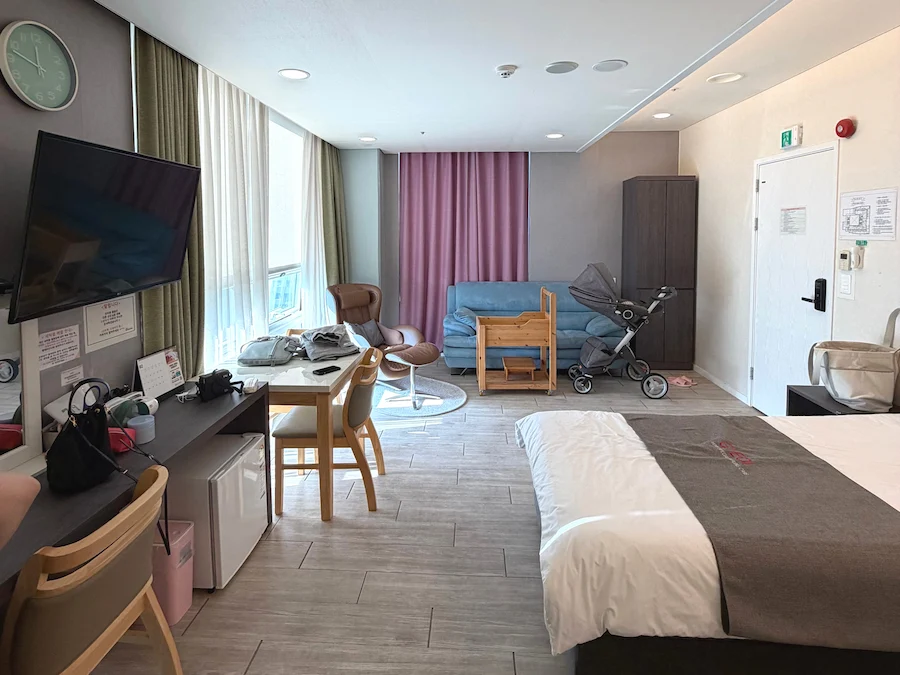
The stroller shown in the photo was provided by the postpartum care center and could be used whenever parents needed to move around the facility with their baby.
One thing that stood out to us was how much attention was given to creating a calm and comfortable environment for both recovery and family bonding.
Compared to a typical hospital room, the experience felt much more focused on rest, healing, and adjusting to life with a newborn.
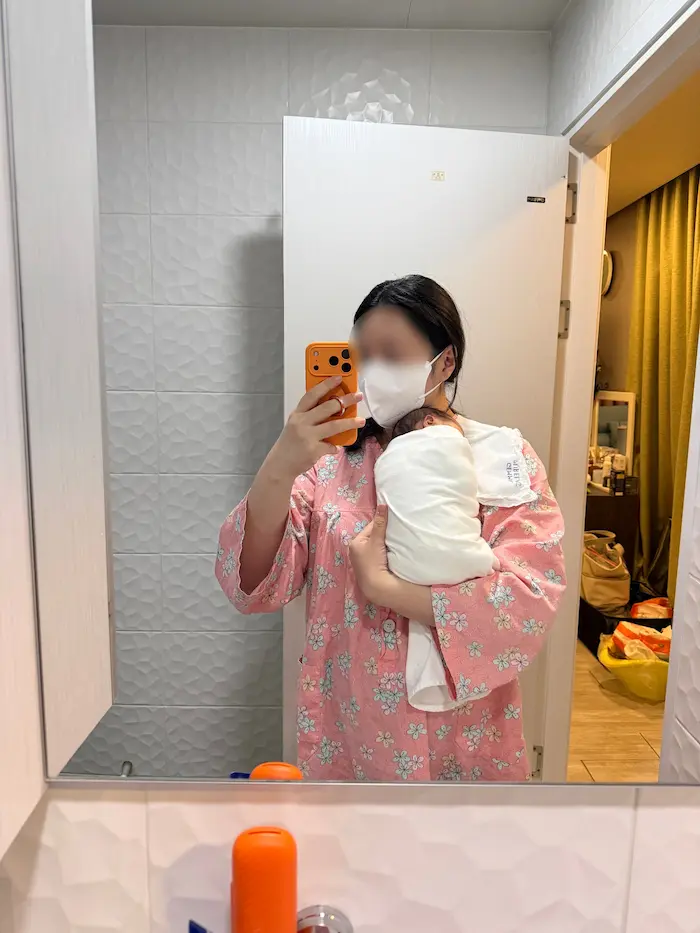
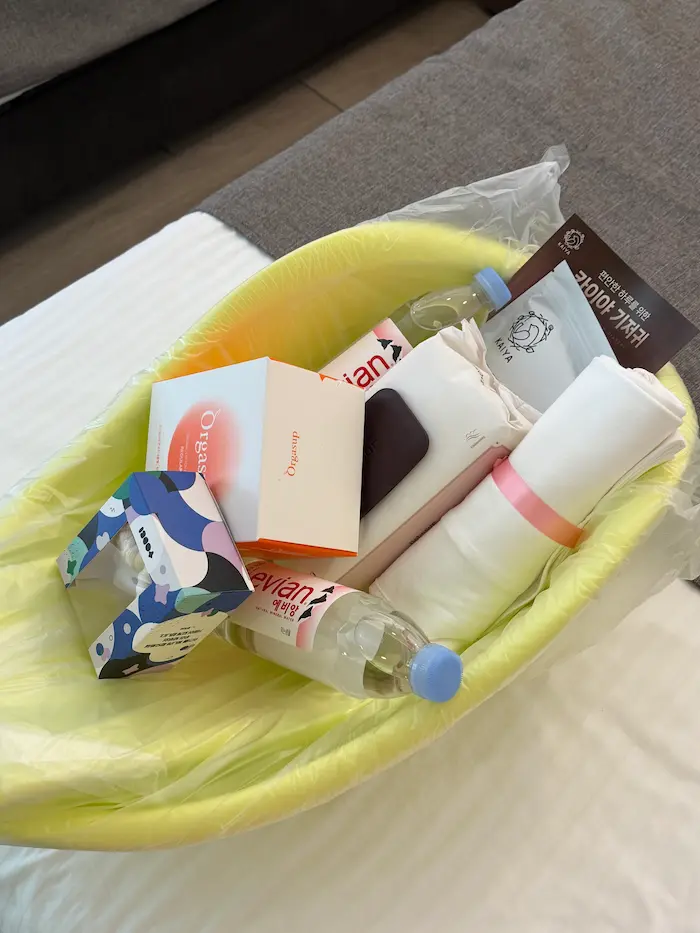
Upon arrival, we received a welcome kit filled with recovery essentials and personal care items for new mothers. It was a small touch, but it immediately made us feel that everything had been carefully prepared.
One of the things we appreciated most was being able to spend uninterrupted time with our daughter, Sia, while knowing that experienced staff were always nearby if we needed help. As first-time parents, that balance between privacy and professional support was incredibly comforting.
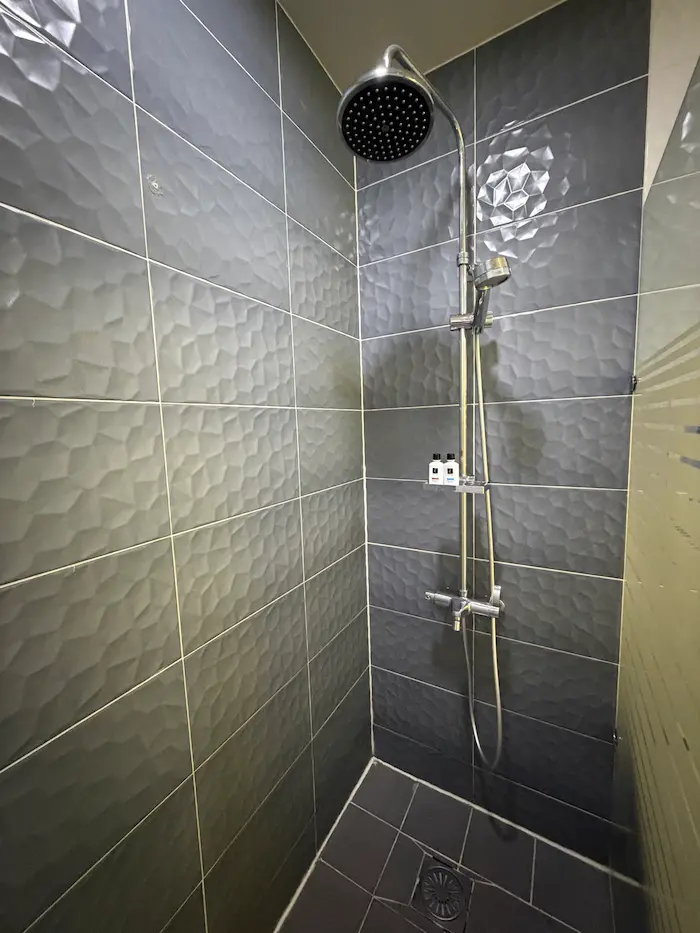
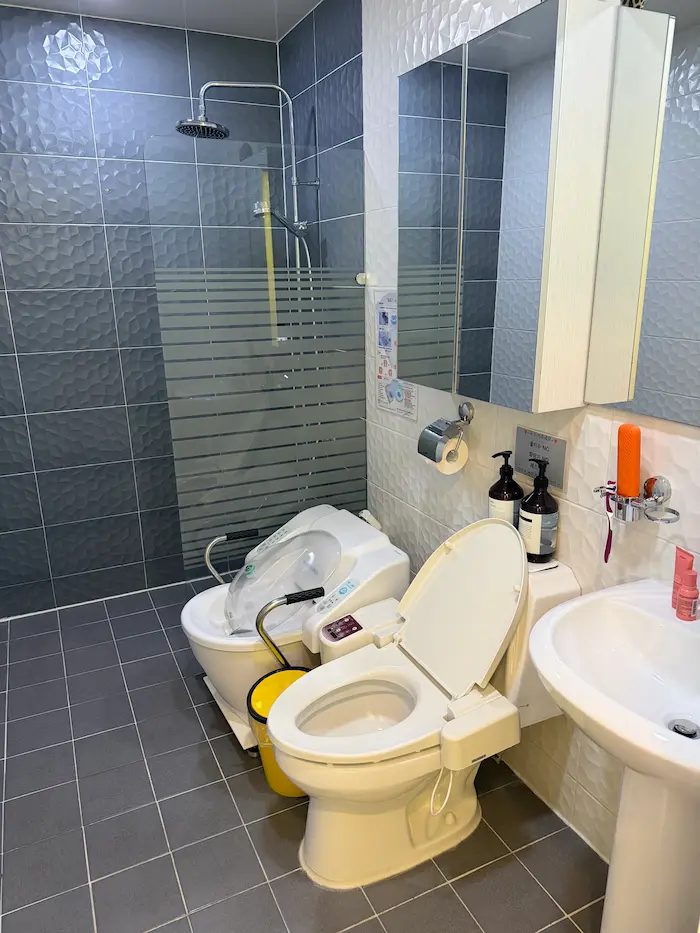
Each room also had its own private shower and recovery bathroom. The center even provided sitz bath equipment, which many Korean postpartum care centers offer to help mothers feel more comfortable during the recovery process.
Compared to a typical hospital room, the entire experience felt much more focused on rest, healing, and easing new parents into life with their baby.
🍱 Six Meals a Day: The Food Everyone Talks About
One of the biggest surprises during our stay was the food.
Many foreigners are amazed to learn that Korean postpartum care centers serve far more than just three meals a day.
Mothers typically receive:
✅ Breakfast
✅ Morning snack
✅ Lunch
✅ Afternoon snack
✅ Dinner
✅ Evening snack
That’s six chances to eat every single day.
The meals are carefully prepared to help mothers recover, maintain their energy, and support breastfeeding.
As a first-time father, I was honestly impressed by the variety and quality of the meals. Every meal felt thoughtfully planned, and it was reassuring to know that my wife was eating nutritious food while focusing on her recovery and caring for our daughter, Sia.
🥣 The Famous Korean Seaweed Soup Tradition
The most iconic postpartum food in Korea is undoubtedly Miyeok-guk (미역국), or seaweed soup.
Seaweed is rich in nutrients such as:
✅ Iron
✅ Calcium
✅ Iodine
✅ Various vitamins and minerals
For generations, Korean mothers have eaten seaweed soup after giving birth because it is believed to support recovery and help with breastfeeding.
However, seaweed soup is only one small part of the meals served at Korean postpartum care centers.
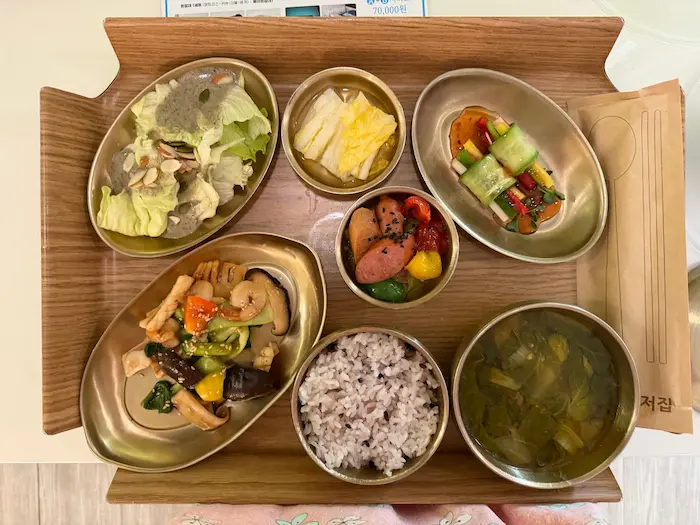
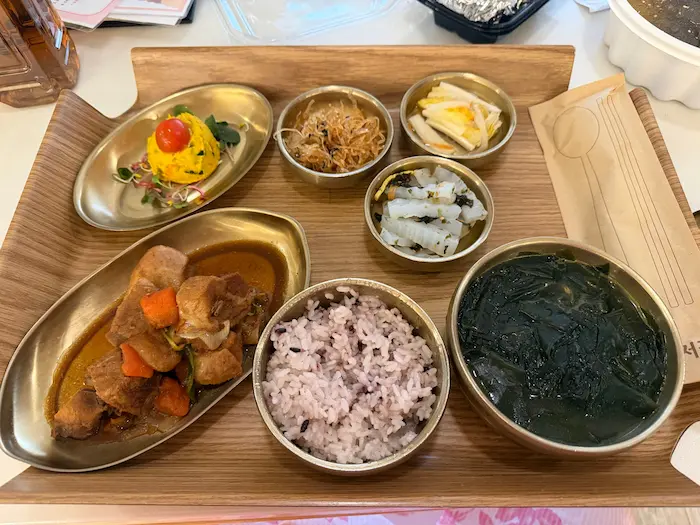
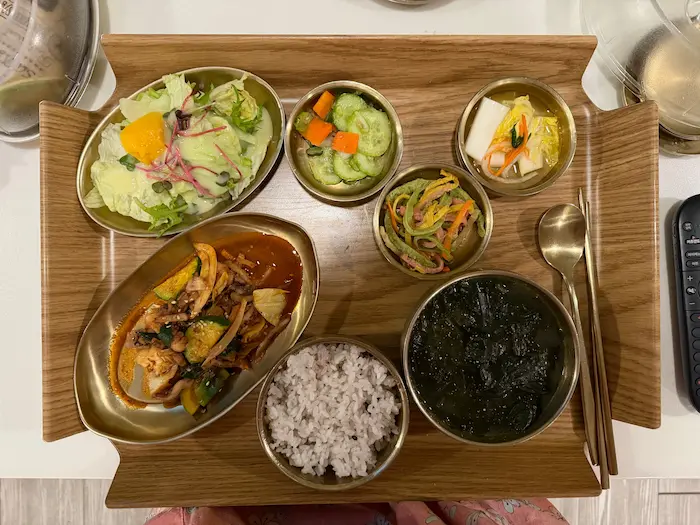
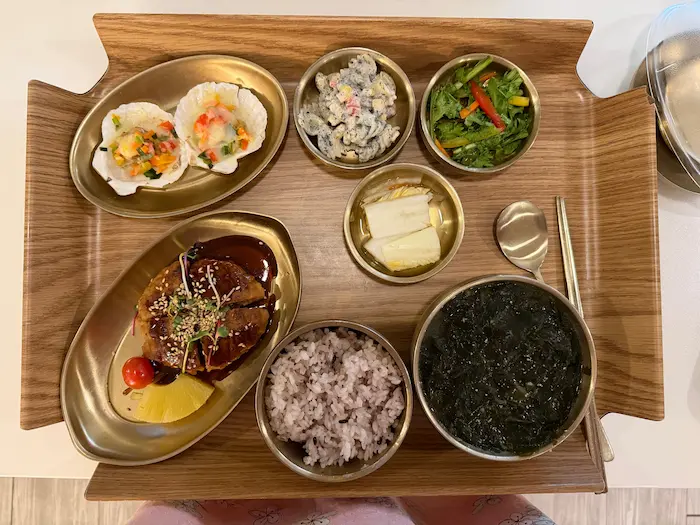
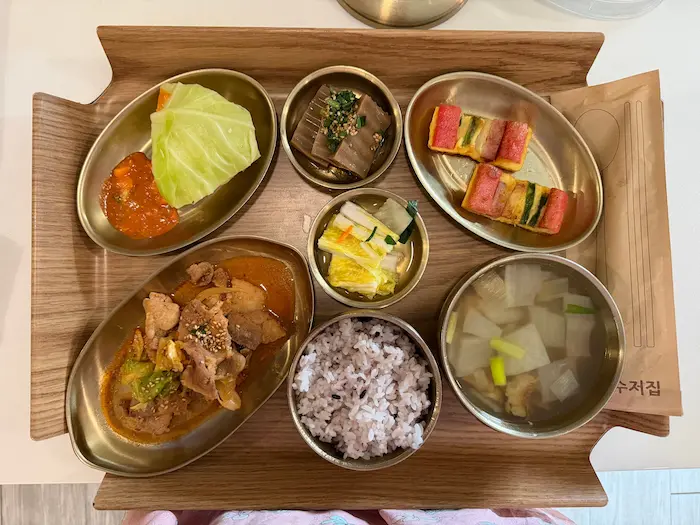
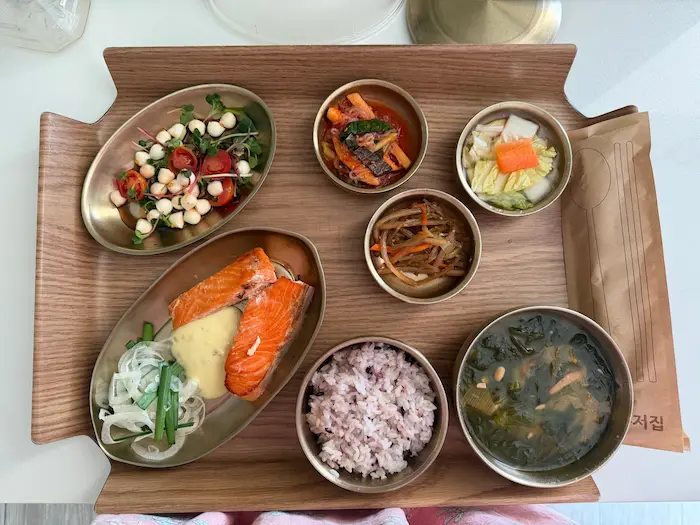
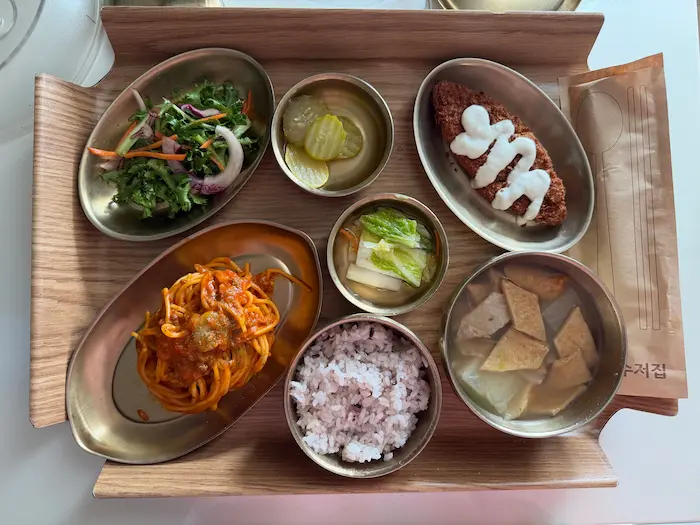
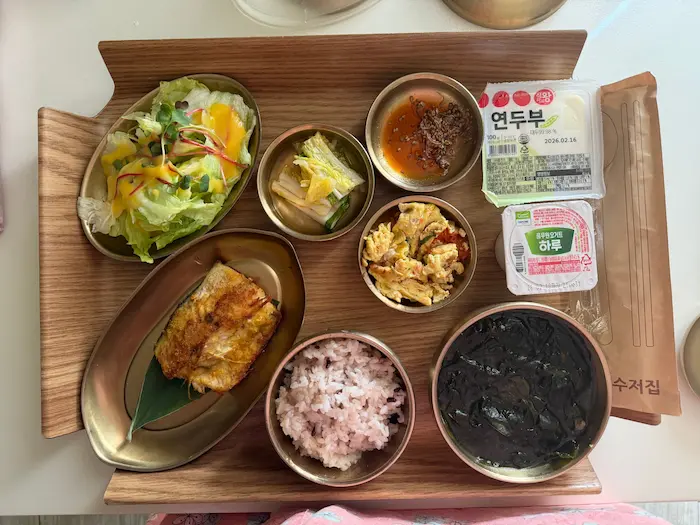
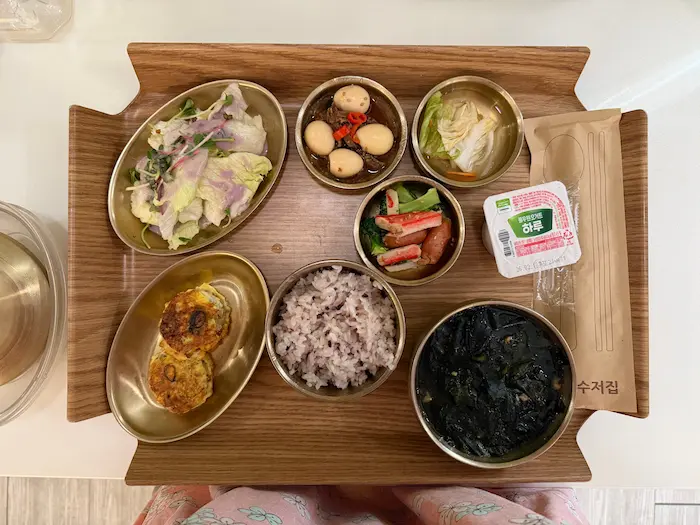
Daily meals served during our two-week stay at the postpartum care center.
During our stay, the menu changed every day. In addition to seaweed soup, meals often included:
🥩 Beef and salmon
🐟 Fish dishes
🍗 Chicken
🥗 Fresh vegetables and salads
🍎 Fruit and a variety of nutritious side dishes
Looking back at these photos, it’s hard to believe how much variety there was. The meals felt more like restaurant-quality food than hospital meals.
Everything was thoughtfully prepared to provide the nutrients and energy that new mothers need during recovery and breastfeeding.
As exhausted first-time parents, not having to think about grocery shopping, cooking, or cleaning was honestly one of the biggest comforts during our stay.
Instead, we could simply focus on recovering, resting, and spending time with our daughter, Sia.
🍰 Snack Time Between Meals
One thing that surprised me was that the food didn’t stop with the three main meals.
In addition to breakfast, lunch, and dinner, mothers also received snacks several times throughout the day.
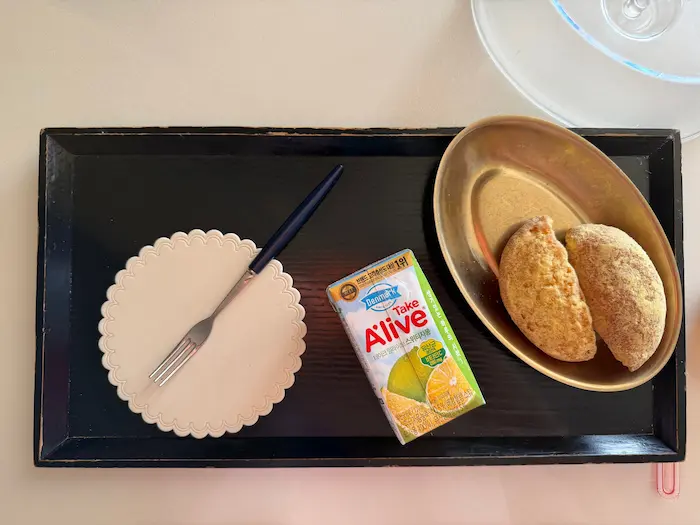
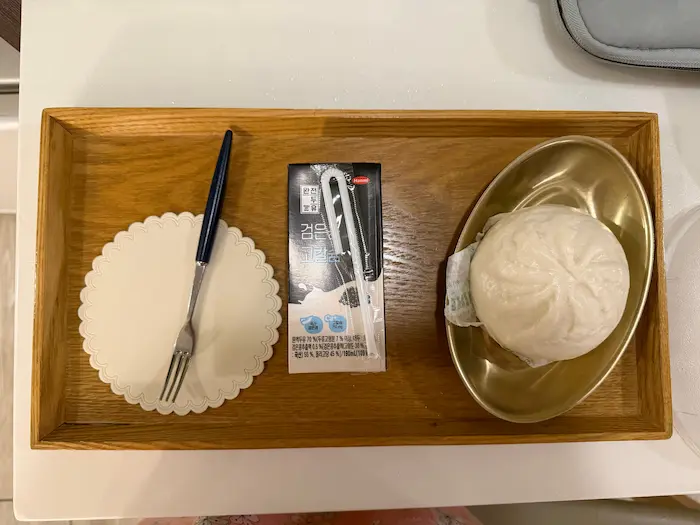
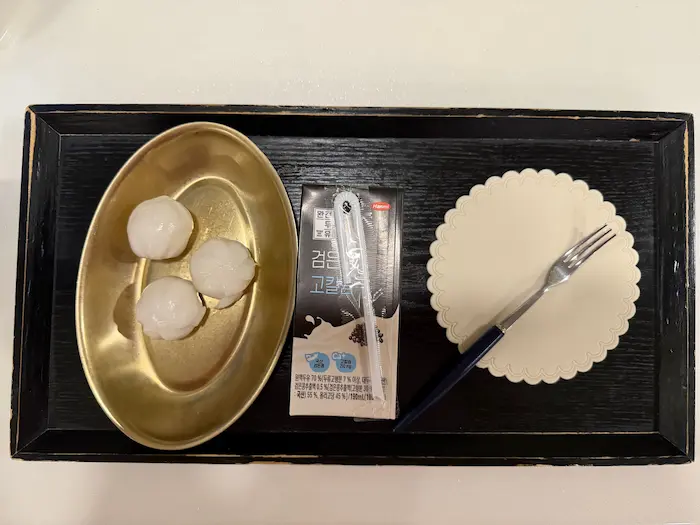
Some of the snacks served during our stay at the postpartum care center.
Depending on the day, snacks included:
🥪 Sandwiches and bread
🥟 Dumplings and rice cakes
🍎 Fresh fruit and yogurt
🧃 Juice and other light refreshments
These snacks weren’t just treats. They were designed to provide extra calories, hydration, and nutrients during postpartum recovery and breastfeeding.
Because new mothers often feel hungry between meals, snack time quickly became something many of them looked forward to each day.
As a first-time father, I was honestly surprised by how much thought went into even the smallest details. Looking back, it felt less like a hospital meal plan and more like a wellness retreat designed to help mothers recover and adjust to life with a newborn.
💆 Postpartum Massage: One of the Most Popular Services
Before becoming a father, I had no idea how much swelling many mothers experience after giving birth.
After delivery, it’s common for mothers to experience swelling in their hands, feet, legs, and even their faces. Recovery can take time, especially after a C-section.
To help with recovery, most Korean postpartum care centers offer professional postpartum massage programs specifically designed for new mothers.
These treatments typically focus on:
✅ Improving circulation
✅ Reducing swelling
✅ Relieving muscle tension
✅ Supporting postpartum recovery
✅ Encouraging lymphatic drainage
The massages aren’t simply about relaxation. For many mothers in Korea, they’re considered an important part of the postpartum recovery process.
At our postpartum care center, mothers could choose from several massage packages designed to help reduce swelling and improve overall comfort during their stay.
My wife often said she felt noticeably lighter after each session. Several other mothers at the center also talked about how much the massages helped them feel more comfortable during recovery.
As a first-time father, I was surprised by how much attention was given to a mother’s recovery after childbirth. It was another reminder that Korean postpartum care centers focus not only on caring for newborns but also on helping mothers heal and regain their strength.y.
🌿 Traditional Korean Recovery Programs
One of the more unique parts of our stay was the option to add a traditional Korean recovery program.
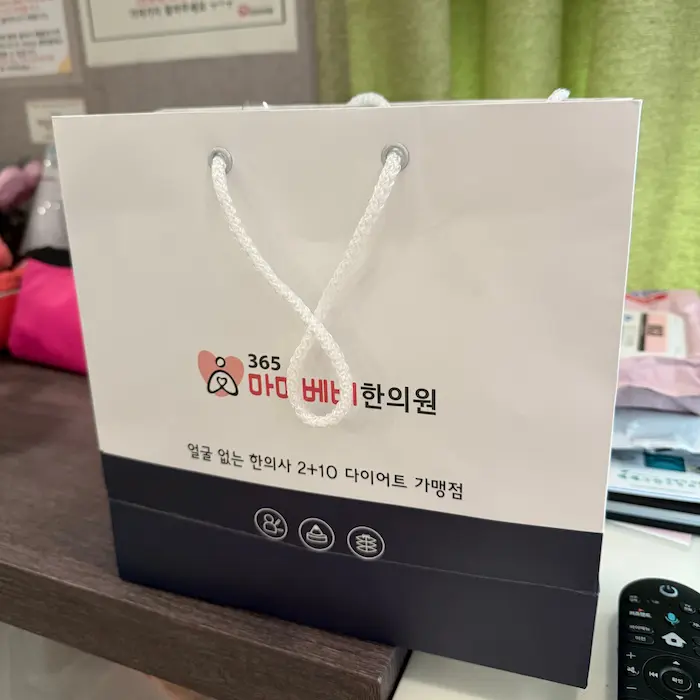
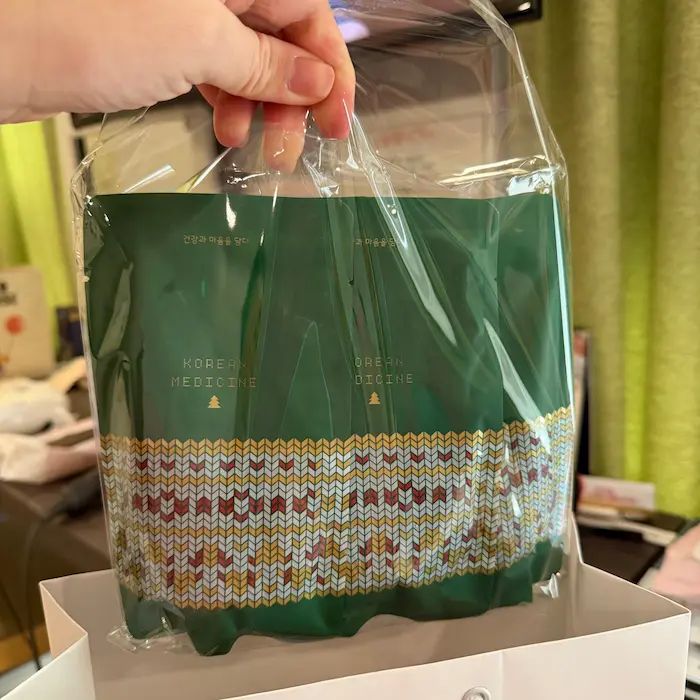
At our postpartum care center, mothers could choose between:
✅ Two complimentary massage sessions
or
✅ One massage session plus a postpartum herbal medicine program
I thought it was interesting that mothers could choose the option that best matched their personal recovery preferences.
My wife decided to try the herbal medicine program and received a one-week supply of postpartum herbal medicine prepared through the center’s partner Korean medicine clinic.
The program was designed to help support:
🌿 Energy recovery
🌿 Postpartum healing and recovery
🌿 Overall well-being during the first weeks after childbirth
Before becoming a parent, I didn’t realize how common these types of traditional recovery programs are in Korea.
While not every postpartum care center offers the exact same services, many Korean facilities work closely with Korean medicine clinics to provide additional recovery options beyond standard medical care.
For me, this was one of the most uniquely Korean aspects of the entire experience. Seeing modern postpartum care combined with traditional wellness practices was something I had never seen before, and I can understand why so many foreigners find it fascinating.
✨ Recovery Facilities for Mothers
One thing that surprised me was how many recovery facilities were available throughout the center.
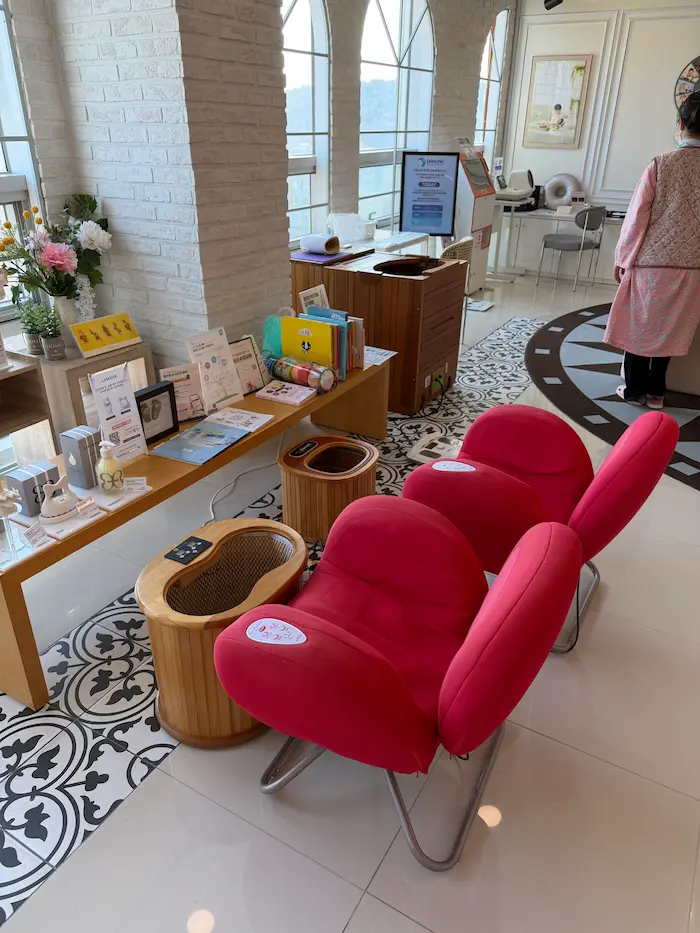
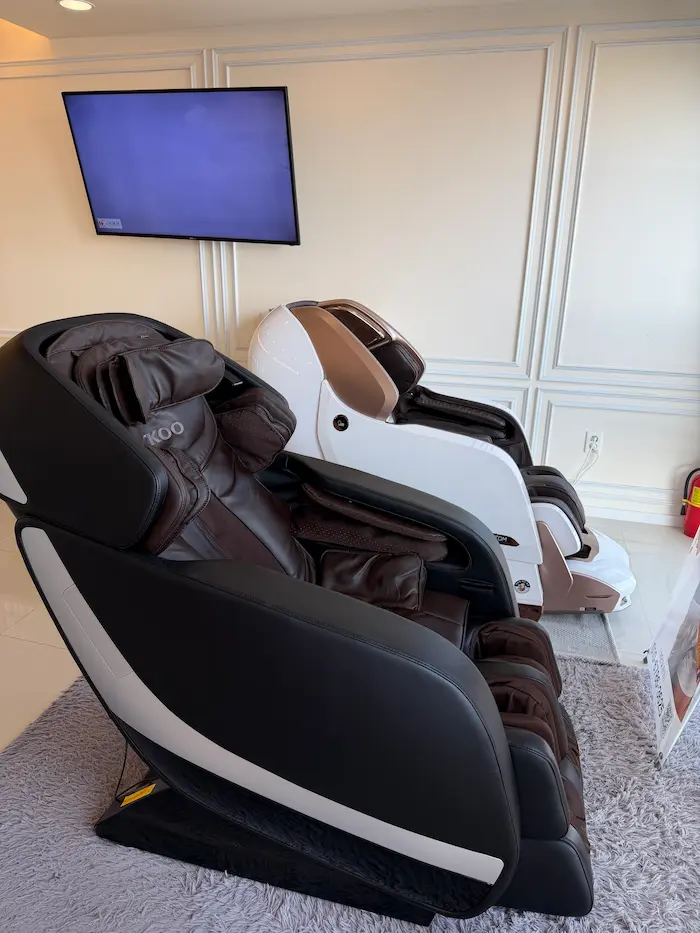
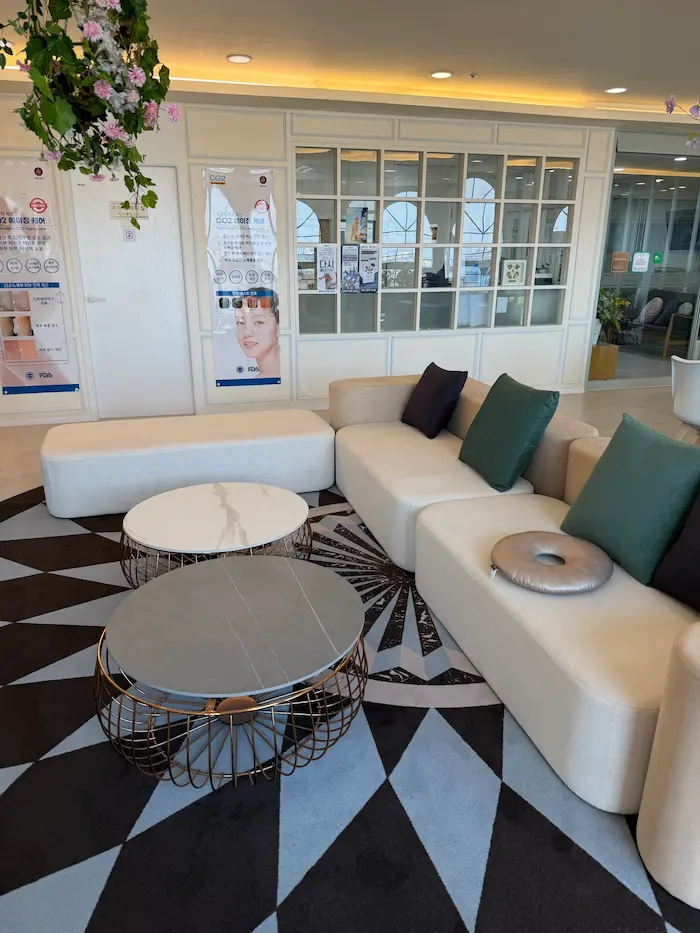
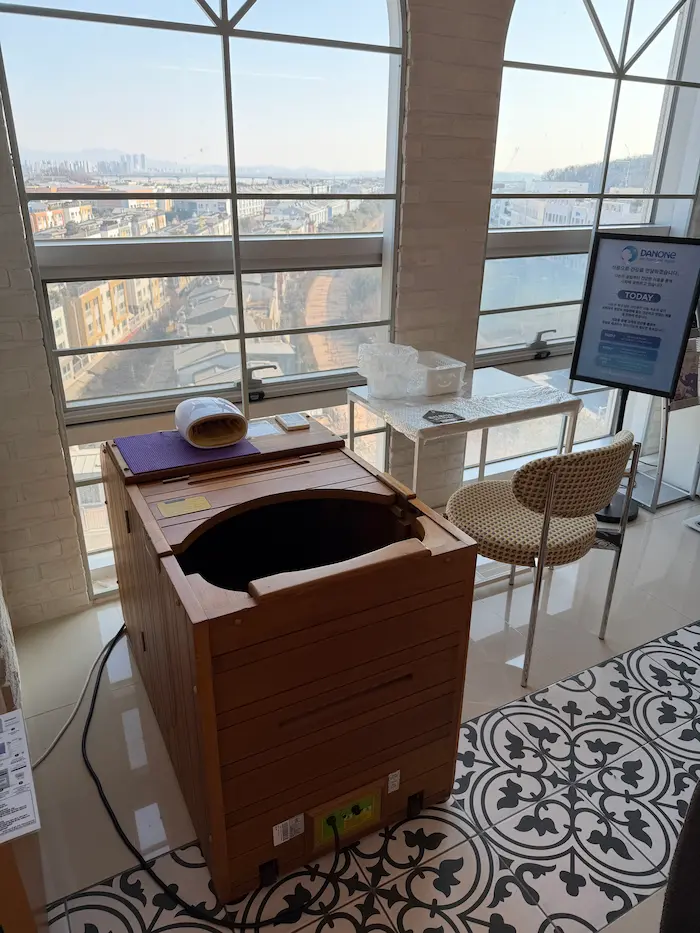
In addition to massages and herbal medicine programs, the center offered several amenities designed to help mothers rest, relax, and recover comfortably.
Some of the facilities included:
✅ Foot spa facilities
✅ Premium massage chairs
✅ Comfortable shared lounges
✅ Warm recovery and wellness areas
These amenities were especially popular among mothers experiencing swelling, fatigue, and muscle tension after childbirth.
Many mothers would stop by after meals or recovery sessions to relax, improve circulation, or simply enjoy a quiet break.
As a first-time father, I honestly didn’t expect a postpartum care center to have this level of comfort and support. It felt much more like a wellness retreat or hotel spa than a medical facility.
Compared to what many foreigners imagine after childbirth, Korean postpartum care centers place a remarkable emphasis on healing, relaxation, and overall well-being, not just medical recovery.
Looking back, it was easy to understand why so many Korean mothers consider this time an important part of their postpartum recovery journey.
👶 The Newborn Care Room: The Heart of the Facility
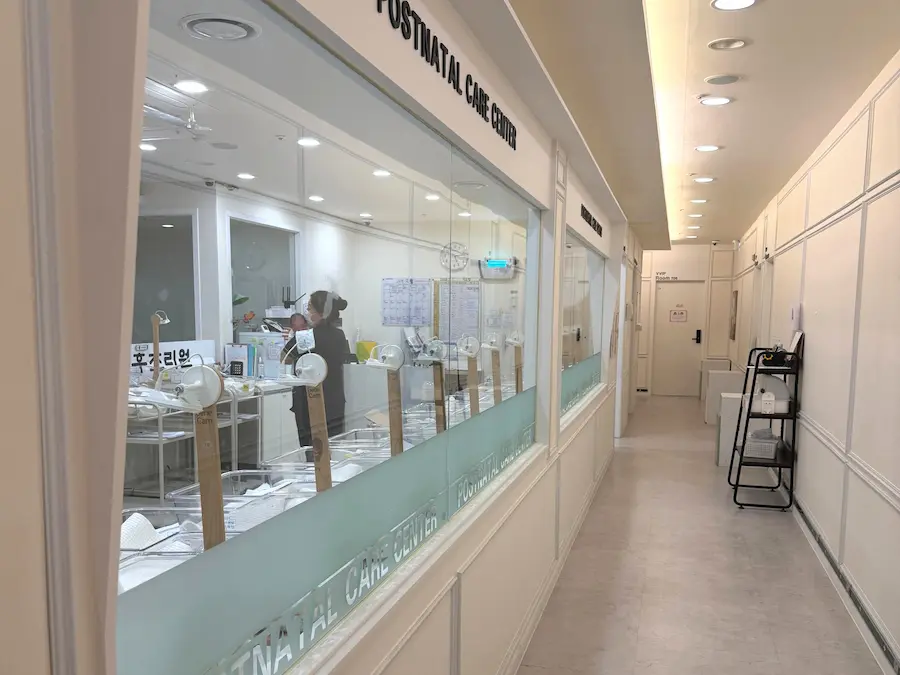
The newborn care room was easily the most important part of the entire facility.
This is where trained nurses and newborn specialists cared for babies 24 hours a day.
👶 What Do the Nurses Monitor?
| Area | What Is Monitored? |
|---|---|
| 🍼 Feeding | Feeding times and milk intake |
| 😴 Sleep | Sleeping patterns and routines |
| 👶 Diapers | Diaper changes and bowel movements |
| 🩺 Health | Overall condition and well-being |
| 🛡️ Safety | Continuous monitoring and newborn safety |
One thing that stood out to me was that parents could look into the nursery through large glass windows along the hallway.
As first-time parents, being able to see our daughter, Sia, while knowing that professionals were caring for her gave us a lot of peace of mind.
It also allowed my wife to focus on resting and recovering during the first few weeks after childbirth.
🛡️ Strict Hygiene and Visitor Policies
Because newborns have delicate immune systems, Korean postpartum care centers follow very strict hygiene rules.
📋 Safety Measures at Our Center
| Policy | Details |
|---|---|
| 🚫 Visitor Restrictions | Access was limited to protect newborns. |
| 🌡️ Entry Screening | Health checks were required before entry. |
| 🧼 Hand Hygiene | Hand washing and sanitizing were strictly enforced. |
| 👨👩👧 Guardian Access | Only designated guardians could enter certain areas. |
At first, some of these rules felt surprisingly strict.
But as new parents, we quickly realized that every precaution was there to protect the babies.
Looking back, the level of care and attention to safety was one of the things that impressed us the most about our stay.
ciated every precaution taken to protect our baby.
❤️ Rooming-In: Spending Time With Your Baby
Although babies spend most of their time in the nursery, parents can usually request to bring their newborn into their room whenever they wish.
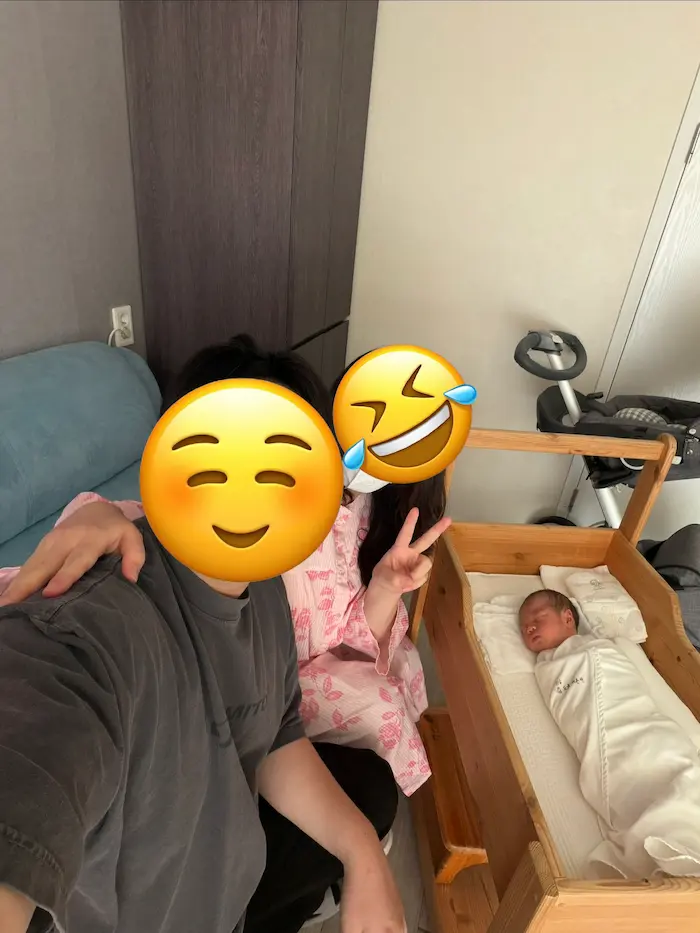
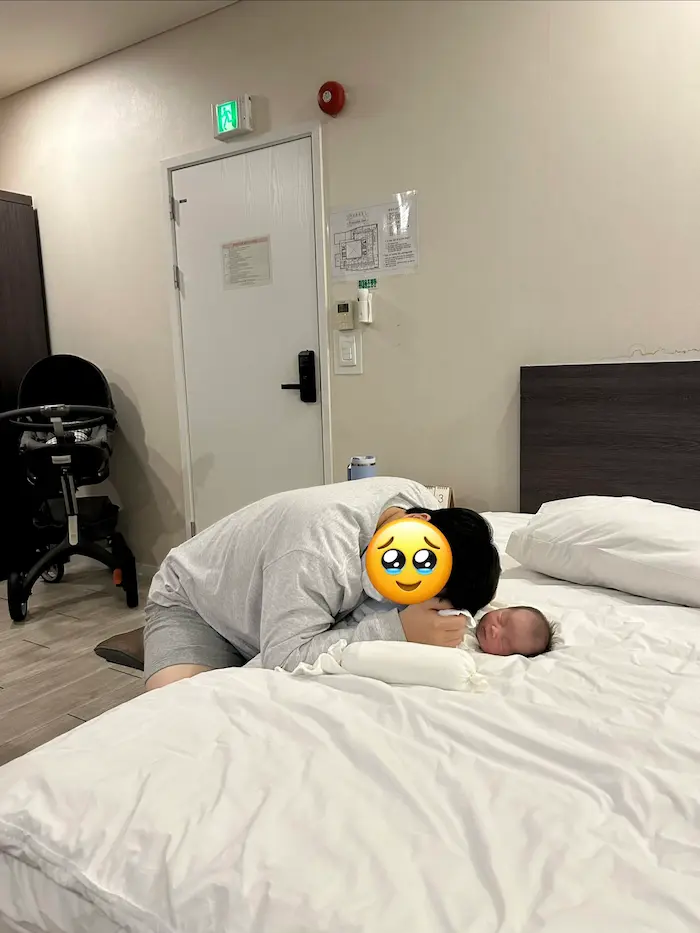
This practice is known as rooming-in.
During these sessions, parents have the opportunity to learn and practice important newborn care skills, including:
| 👶 What Parents Learn | Examples |
|---|---|
| 🍼 Feeding techniques | Holding and feeding the baby comfortably |
| 👋 Burping methods | Helping the baby release gas after feeding |
| 🤱 Soothing techniques | Calming and comforting a fussy baby |
| 🧷 Diaper changing | Learning proper diaper care |
| ❤️ Bonding with your baby | Spending uninterrupted time together |
For us, these moments were incredibly valuable because they helped us build confidence as first-time parents before bringing our daughter, Sia, home.
At night, parents can usually choose whether their baby stays in the nursery or remains in the room.
For many recovering mothers, having the option to rest and sleep for a few uninterrupted hours can make a huge difference.
Looking back, some of our most memorable moments at the postpartum care center happened during rooming-in. It was our first chance to slow down, spend quiet time with our daughter, and begin adjusting to life as a family of three.
📚 What Do Parents Learn at a Korean Postpartum Care Center?
A Korean postpartum care center is much more than a place for mothers to recover.
For first-time parents, it’s also a place to learn, practice, and gain confidence before bringing your baby home.
During our stay, the nurses patiently guided us through many of the basics of newborn care.
🍼 Feeding and Formula Basics
The staff taught us:
| Topic | What We Learned |
|---|---|
| 🍼 Feeding positions | How to hold and feed a newborn comfortably |
| 🤱 Latching techniques | Tips for breastfeeding |
| 🧴 Bottle sterilization | How to clean and sanitize bottles |
| 🥛 Formula preparation | Proper mixing and feeding methods |
| ❄️ Milk storage | Safe storage and handling guidelines |
As first-time parents, we asked countless questions, and the nurses never made us feel embarrassed for asking.
🛁 Learning How to Bathe a Newborn
Bathing a newborn for the first time can feel intimidating.
Watching experienced nurses demonstrate each step helped us learn:
✅ How to hold a newborn safely
✅ How to wash and dry the baby properly
✅ What products to use
✅ How to make bath time more comfortable
The hands-on guidance gave us much more confidence before returning home.
👶 Diaper Changes and Burping
The nurses also taught us several everyday parenting skills.
| Skill | What We Learned |
|---|---|
| 🧷 Diaper changes | Proper diaper changing techniques |
| 👋 Burping | Helping the baby release gas after feeding |
| 👀 Newborn cues | Recognizing hunger and sleep signals |
| ❤️ Soothing | Calming a fussy baby |
By the time we left, we felt far more prepared than we did on our first day.
Looking back, the education alone was worth a large part of the cost.
🎒 What Should You Pack?
Most baby necessities are provided by Korean postpartum care centers, but parents should still bring a few personal items.
🎒 Essential Packing Checklist
| 👩 For Mom | 👶 For Baby |
|---|---|
| ✅ Comfortable pajamas or nursing clothes | ✅ Receiving blanket |
| ✅ Nursing bras and nursing pads | ✅ Swaddle blankets |
| ✅ Toiletries | ✅ Going-home outfit |
| ✅ Moisturizer and lip balm | ✅ Car seat (if needed) |
| ✅ C-section support belt (optional) | — |
💡 Most Korean postpartum care centers provide diapers, formula, wipes, and baby clothing during your stay, so you only need to pack a few personal essentials.
👨 A Dad’s Perspective
Fathers usually choose one of two approaches:
| Option | Description |
|---|---|
| 🏨 Stay full-time | Spend the entire stay at the center |
| 🚗 Commute | Travel between work and the center |
I spent as much time as possible with my wife and daughter because I wanted to learn alongside them.
Looking back, I have no regrets.
Those two weeks gave me confidence that would have been difficult to gain anywhere else.
They also gave us something even more valuable—the chance to slowly adjust to life as a family of three before bringing our daughter, Sia, home.ise.
❓ Frequently Asked Questions
Q. Can fathers stay overnight at a Korean postpartum care center?
It depends on the facility. Some centers allow fathers to stay overnight, while others only permit visits during designated hours. Always check the center’s policy before making a reservation.
Q. How much does a Korean postpartum care center cost?
Prices vary depending on the location, room type, and services provided. In Seoul, a two-week stay can range from a few thousand dollars to significantly more at premium facilities.
Q. Do I need to speak Korean to use a postpartum care center?
Not necessarily, but English support varies by facility. Some centers have staff who speak English, while others communicate primarily in Korean. International families may want to ask about language support before booking.
Q. When should I book a postpartum care center in Korea?
Many parents reserve their spot several months before the due date, especially in large cities where popular centers fill up quickly.
Q. Are postpartum care centers covered by Korean health insurance?
In most cases, postpartum care centers are not covered by National Health Insurance, so families usually pay out of pocket. However, some local governments offer childbirth support programs or subsidies, so it’s worth checking what benefits may be available in your area.
※For more information about childbirth and healthcare services in Korea, you can visit the official website of the National Health Insurance Service (NHIS).
🎯 Final Thoughts
Is a Korean Postpartum Care Center Worth It?
At first, spending thousands of dollars on a two-week stay may sound expensive.
But after experiencing it ourselves, I completely understand why so many Korean parents consider it money well spent.
A Korean postpartum care center offers much more than just a place to stay.
| What It Provides | Why It Matters |
|---|---|
| 👶 Professional newborn care | Gives parents peace of mind while experts care for the baby. |
| 🌿 Recovery support for mothers | Helps mothers rest, heal, and regain their strength. |
| 📚 Parenting education and hands-on guidance | Builds confidence before bringing the baby home. |
| 🍱 Nutritious meals and wellness programs | Supports recovery and breastfeeding. |
| ❤️ A smoother transition into parenthood | Makes the first weeks with a newborn feel far less overwhelming. |
Most importantly, it gives new parents something incredibly valuable: time.
| ❤️ The Gift of Time | |
|---|---|
| Time to recover | Physically and emotionally after childbirth. |
| Time to learn | Practice newborn care and parenting basics. |
| Time to bond | Create precious early memories with your baby. |
| Time to build confidence | Feel more prepared before bringing your newborn home. |
As a first-time father, I truly believe our two weeks at a Korean postpartum care center made the transition into parenthood far less stressful and far more enjoyable.
Looking back, some of our earliest and happiest memories as a family were made during those two weeks with our daughter, Sia♥.
For our family, it was worth every dollar.
📚 Related Korea Living Guides
New to Korea? These guides can help make everyday life easier:
Korea Baby Benefits Guide for Foreigners (2026)
How to Visit a Doctor in Korea as a Foreigner
Korean Pharmacy Guide