Korea childbirth benefits for foreigners can provide significant financial support during pregnancy, childbirth, and early childcare.
Many foreign residents assume these benefits are only available to Korean citizens. However, depending on your family’s immigration status, National Health Insurance enrollment, and your child’s nationality, you may qualify for a wide range of government support programs.
When my wife and I welcomed our daughter in Korea, I was surprised by how many benefits were available—from pregnancy medical vouchers and the First Meeting Voucher to monthly childcare payments and electricity bill discounts.
In this guide, you’ll learn who qualifies, how much support is available, and how to apply for the most important pregnancy and childcare benefits in Korea.
📌 Quick Summary
💰 How Much Support Can Foreign Families Receive in Korea?
Depending on your family’s circumstances and eligibility, you may qualify for multiple government support programs before and after childbirth.
📊 Major Childbirth & Childcare Benefits
| Benefit | Support Amount |
|---|---|
| 💳 Pregnancy & Childbirth Medical Voucher | Up to ₩1,400,000 |
| 🎁 First Meeting Voucher | Up to ₩3,000,000 |
| 👶 Parents Benefit | Up to ₩1,000,000 per month |
| 👧 Child Allowance | ₩100,000 per month |
| 🍼 Diaper & Formula Support | Additional monthly assistance for eligible households |
| ⚡ Electricity Bill Discount | Monthly utility bill savings for eligible families |
| 🏛️ Local Government Childbirth Incentives | Varies by city and district |
💡 Potential Total Support
For eligible families, the combined value of these programs can add up to tens of millions of won during pregnancy and a child’s early years.
Because some benefits have application deadlines and specific eligibility requirements, it’s important to check which programs your family qualifies for as early as possible.
A little preparation can make a big difference—and help ensure you don’t miss out on valuable support available to your family in Korea.
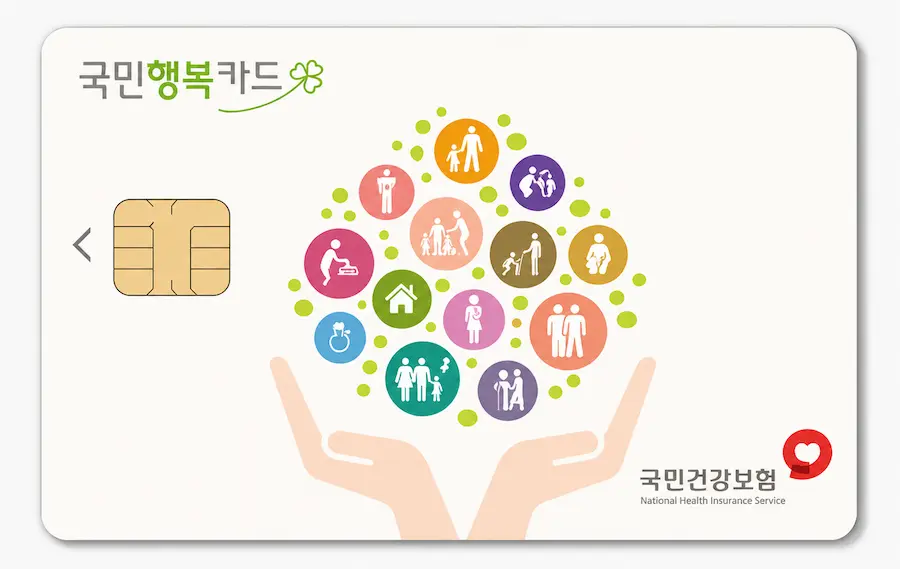
💳 Benefit #1: National Happiness Card (국민행복카드)
The National Happiness Card (국민행복카드) is the foundation of South Korea’s pregnancy and childbirth support system.
Rather than providing direct cash payments, the government loads approved benefits and vouchers onto this card, which can then be used at eligible hospitals, pharmacies, and childcare-related businesses.
For many families, this card serves as the gateway to Korea’s most valuable pregnancy and childcare benefits.
🎁 Benefits Linked to the National Happiness Card
✅ Pregnancy & Childbirth Medical Voucher (임신·출산 진료비 지원)
✅ First Meeting Voucher (첫만남 이용권)
✅ Diaper & Formula Support Programs
✅ Various Government Welfare Voucher Services
🌏 Can Foreigners Apply?
In many cases, yes.
Foreign residents may qualify if they meet the necessary requirements.
✅ Basic Eligibility Requirements
| Requirement | Details |
|---|---|
| 🏥 National Health Insurance | Must be enrolled as a subscriber or dependent |
| 🤰 Pregnancy Confirmation | Must be confirmed by a licensed Korean medical institution |
| 📍 Valid Residency Status | Must have legal residence status in Korea |
| 🪪 Identification | ARC or other required identification documents |
👨👩👧 Who Commonly Qualifies?
| Family Type | Eligibility Possibility |
|---|---|
| 💍 International Marriage Families | Often eligible |
| 💼 Foreign Employees in Korea | Often eligible |
| 🎓 Long-Term Foreign Residents | Often eligible |
| 👨👩👧 Foreign Spouses of Korean Citizens | Often eligible |
| 🏥 National Health Insurance Dependents | Often eligible |
⚠️ Important Note
Receiving a National Happiness Card does not automatically qualify you for every government benefit.
Each program has its own application process and eligibility requirements.
Before applying, it’s a good idea to confirm your eligibility through:
🏢 Community Service Center (주민센터)
🏥 National Health Insurance Service (NHIS)
📱 Welfare-ro (복지로)
💡 Expat Dad Tip
When our daughter was born in Korea, applying for the National Happiness Card was one of the first things we did.
Once the card was issued, it became much easier to access medical support and other childcare benefits.
If you’re expecting a baby in Korea, this card should be near the top of your checklist.
💰 Benefit #2: Pregnancy & Childbirth Medical Support (임신·출산 진료비 지원)
One of the most valuable benefits available to expectant parents in Korea is the Pregnancy & Childbirth Medical Voucher.
This voucher helps cover many pregnancy-related medical expenses, including:
✅ Prenatal checkups
✅ Ultrasound examinations
✅ OB-GYN visits
✅ Prescription medications
✅ Delivery and childbirth expenses
💳 Support Amount
| Pregnancy Type | Support Amount |
|---|---|
| 👶 Single Pregnancy | ₩1,000,000 |
| 👶👶 Twins or Multiple Pregnancy | ₩1,400,000 |
The approved amount is loaded directly onto your National Happiness Card and can be used at eligible hospitals, clinics, and pharmacies throughout Korea.
💡 Good to Know
Because the voucher can be used for many routine pregnancy expenses, it often covers a significant portion of prenatal care costs for expectant parents.
🎁 Benefit #3: First Meeting Voucher (첫만남 이용권)
The First Meeting Voucher (첫만남 이용권) is a one-time government benefit provided after your baby is born.
The purpose of this voucher is simple: to help families with the initial costs of raising a newborn.
💳 Support Amount
| Child | Support Amount |
|---|---|
| 👶 First Child | ₩2,000,000 |
| 👶👶 Second Child or Later | ₩3,000,000 |
The benefit is typically loaded onto your National Happiness Card after approval.
🛍️ What Can You Use It For?
Many parents use the voucher to purchase essential baby items, such as:
🧷 Diapers
🍼 Formula
🚼 Strollers
🚗 Car seats
👕 Baby clothing
🛏️ Baby furniture
🏥 Postnatal care center (Sanhujoriwon) expenses
🧸 Other baby and childcare products
Because newborn-related expenses add up quickly, this voucher can significantly reduce the financial burden during the first few months after birth.
👶 Benefit #4: Parents Benefit (부모급여)
The Parents Benefit (부모급여) is one of Korea’s most generous childcare support programs for families with young children.
The program provides monthly financial support during a child’s first two years, helping parents cover everyday childcare expenses.
💰 Monthly Support Amount
| Child’s Age | Monthly Benefit |
|---|---|
| 👶 Age 0 (0–11 months) | ₩1,000,000 per month |
| 👶 Age 1 (12–23 months) | ₩500,000 per month |
💵 Maximum Total Benefit
| Period | Total Amount |
|---|---|
| 👶 First Year (12 months) | ₩12,000,000 |
| 👶 Second Year (12 months) | ₩6,000,000 |
| 🎉 Total Parents Benefit | ₩18,000,000 |
This means eligible families can receive up to ₩18 million through the Parents Benefit program alone.
🌏 Can Foreign Families Receive Parents Benefit?
In many cases, eligibility depends more on the child’s status than the parents’ nationality.
Generally, the child must:
✅ Hold Korean nationality
✅ Reside in Korea
✅ Be registered in the Korean resident registration system
If these requirements are met, many international families may also qualify for the benefit.
💡 Good to Know
Parents Benefit can usually be received together with other childcare programs, including:
✅ Child Allowance (아동수당)
✅ First Meeting Voucher (첫만남 이용권)
✅ Local Government Childbirth Incentives
This makes it one of the most valuable long-term childcare benefits available in Korea.
👧 Benefit #5: Child Allowance (아동수당)
The Child Allowance (아동수당) provides monthly financial support to families raising children in Korea.
Unlike Parents Benefit, which ends after the first two years, Child Allowance continues until a child turns eight years old.
💰 Monthly Support Amount
| Benefit | Amount |
|---|---|
| 👧 Child Allowance | ₩100,000 per month |
📅 Eligibility Period
- Paid from birth until the month before the child turns 8 years old
- Maximum payment period: 95 months
💵 Maximum Total Benefit
| Benefit | Total Amount |
|---|---|
| 👧 Child Allowance (95 months) | ₩9,500,000 |
An eligible child can receive up to ₩9.5 million through the Child Allowance program.
🍼 Benefit #6: Diaper & Formula Support
Some families may qualify for additional assistance to help cover the cost of diapers and infant formula during a baby’s early years.
💰 Monthly Support Amount
| Support Type | Amount |
|---|---|
| 🧷 Diaper Support | ₩90,000 per month |
| 🍼 Formula Support | ₩110,000 per month |
🌏 Who Can Apply?
Eligibility is generally determined by:
✅ Household income
✅ Family circumstances
✅ Government support criteria
Because the requirements may change from time to time, it’s best to check with your local government office or public health center before applying.
📝 Where to Apply
| Application Channel | Details |
|---|---|
| 🏥 Public Health Center (보건소) | Primary application location |
| 🏢 Community Service Center (주민센터) | Application assistance and guidance |
💡 Good to Know
This program is separate from:
✅ National Happiness Card (국민행복카드)
✅ Parents Benefit (부모급여)
✅ Child Allowance (아동수당)
If your family qualifies, diaper and formula support can provide meaningful help with everyday childcare expenses, especially during a baby’s first year.
⚡ Benefit #7: Electricity Bill Discount for Families With Young Children
Many foreign families are surprised to learn that South Korea also offers an electricity bill discount for households with young children.
Although this benefit is often overlooked, it can provide meaningful monthly savings during a child’s early years.
💰 What Is the Benefit?
Eligible households can receive a discount on their monthly electricity bill through the Korea Electric Power Corporation (KEPCO).
📊 Benefit Overview
| Benefit | Details |
|---|---|
| ⚡ Monthly Electricity Discount | Reduced electricity charges each month |
| 👶 Eligibility Period | Available for households with children under 3 years old |
| 👨👩👧 Additional Family Benefits | Larger households may qualify for extra discounts |
Because electricity usage often increases after a baby is born, many families find this benefit especially helpful during the newborn and toddler years.
🌏 Can Foreign Families Apply?
In many cases, yes.
If your child is properly registered in Korea and your household meets the eligibility requirements, foreign families may also qualify for this discount.
Eligibility may depend on:
✅ Household registration status
✅ Child registration status
✅ Utility account information
✅ Current KEPCO eligibility requirements
Because individual circumstances can vary, it’s always a good idea to confirm your eligibility directly with KEPCO or your local Administrative Welfare Center (주민센터).
📝 How to Apply
You can usually apply through one of the following channels:
| Application Method | Details |
|---|---|
| 🏢 KEPCO Branch Office | Apply directly at a local KEPCO office |
| 📞 KEPCO Customer Service | Request assistance by phone |
| 🌐 KEPCO Online Services | Apply through KEPCO’s online platform |
| 🏢 Administrative Welfare Center (주민센터) | Receive guidance and application assistance |
💡 Tip: It is generally recommended to apply after completing your child’s birth registration.
💡 Good to Know
This benefit is often overlooked, but it can provide useful monthly savings for up to three years.
Because the application process is relatively simple, it’s worth checking your eligibility once your child’s birth registration has been completed.
🏛️ Benefit #8: Local Government Childbirth Incentives
In addition to national childcare benefits, many cities and districts in Korea offer their own childbirth support programs and financial incentives.
Because these programs are managed by local governments, benefits and eligibility requirements vary depending on where you live.
🎁 Types of Local Benefits
Depending on your city or district, you may be eligible for:
✅ One-time childbirth grants
✅ Monthly childcare support payments
✅ Baby gift packages
✅ Additional family assistance programs
Some local governments offer only a small one-time payment, while others provide millions of won in additional support.
🌏 Can Foreign Families Apply?
Possibly.
Eligibility depends on your local government’s rules and may consider:
✅ Child’s nationality and registration status
✅ Parents’ residency status
✅ Length of residence in the area
✅ Household registration requirements
Because every municipality has different rules, it’s important to check directly with your local government office.
📝 Where to Apply
| Application Channel | Details |
|---|---|
| 🏢 Community Service Center (주민센터) | Primary application location |
| 🌐 Local Government Website | Information and online applications (where available) |
| ☎️ Local Government Hotline | Eligibility and application guidance |
💡 Good to Know
Some local childbirth incentives require you to apply within a specific time period after your child’s birth or birth registration.
Missing the application deadline could mean losing access to the benefit.
After completing your child’s birth registration, one of the first things you should do is check what additional support your local government offers.
🌏 Eligibility & Combined Benefits
Many international families wonder whether they can qualify for Korea’s childcare benefits and receive multiple programs at the same time.
✅ Basic Eligibility Requirements
In general, the child must:
✅ Hold Korean nationality
✅ Reside in Korea
✅ Be registered in the Korean resident registration system
📊 Combined Maximum Amount
Eligible families can typically receive both Parents Benefit (부모급여) and Child Allowance (아동수당) at the same time.
| Benefit | Maximum Amount |
|---|---|
| 👶 Parents Benefit | ₩18,000,000 |
| 👧 Child Allowance | ₩9,500,000 |
| 🎉 Combined Total | ₩27,500,000 |
This means eligible families may receive up to ₩27.5 million in direct childcare support through these two programs alone.
This total does not include additional benefits such as:
✅ National Happiness Card (국민행복카드)
✅ First Meeting Voucher (첫만남 이용권)
✅ Diaper & Formula Support
✅ Electricity Bill Discount
✅ Local Government Childbirth Incentives
💡 Good to Know: The total amount of support available to families can be significantly higher when national and local benefits are combined.eeting Voucher, diaper support, electricity bill discounts, or local government childbirth incentives.
🌏 Example: International Marriage Family
The example below shows a common international family living in Korea.
| Family Member | Example |
|---|---|
| 👩 Mother | Japanese Citizen |
| 👨 Father | Korean Citizen |
| 👶 Child | Korean Citizen |
✅ Potential Benefits
Depending on eligibility, this family may qualify for the following programs:
| Benefit | Available |
|---|---|
| 💳 National Happiness Card | ✅ |
| 💰 Pregnancy & Childbirth Medical Voucher | ✅ |
| 🎁 First Meeting Voucher | ✅ |
| 👶 Parents Benefit | ✅ |
| 👧 Child Allowance | ✅ |
| 🍼 Diaper & Formula Support | ✅ (if eligible) |
| ⚡ Electricity Bill Discount | ✅ |
| 🏛 Local Government Childbirth Incentives | ✅ (varies by region) |
💡 This is why it is important to check every available government support program after childbirth.
📝 How to Apply
Most pregnancy and childcare benefits can be applied for through the following channels:
| Application Channel | Purpose |
|---|---|
| 🏢 Community Service Center (주민센터) | Birth-related government benefits |
| 🌐 Government24 | Online applications |
| 📱 Welfare-ro (복지로) | Welfare and childcare benefits |
| 🏥 Public Health Center (보건소) | Diaper and formula support |
| 💳 National Happiness Card Issuers | Pregnancy medical vouchers |
📂 Documents to Prepare
Preparing the following documents in advance can make the application process much easier.
| Document | Required |
|---|---|
| 🪪 Alien Registration Card (ARC) | ✅ |
| 📘 Passport | ✅ |
| 📋 National Health Insurance Information | ✅ |
| 🏥 Pregnancy Confirmation Documents | ✅ |
| 💍 Marriage Certificate (if applicable) | ✅ |
| 👶 Child Registration Documents | After Birth |
💡 Keeping digital copies of these documents can help speed up applications and reduce paperwork when applying for multiple benefits.ions and reduce paperwork after childbirth.
⚠️ Common Mistakes Foreign Parents Make
Many foreign parents miss valuable benefits simply because they are unaware of the application process.
Common mistakes include:
❌ Assuming foreigners are not eligible for government benefits
❌ Applying for the National Happiness Card but forgetting to activate the vouchers
❌ Missing application deadlines
❌ Overlooking local government childbirth incentives
❌ Forgetting to apply for electricity bill discounts
❌ Waiting until after delivery to prepare required documents
💡 Applying early and keeping your documents organized can save both time and money during pregnancy and after childbirth.
❓ Frequently Asked Questions
Q. Can I receive benefits if both parents are foreigners?
Yes, some benefits may still be available.
Eligibility depends on factors such as your visa status, National Health Insurance enrollment, and your child’s nationality. While certain programs require the child to hold Korean nationality, others may be available to eligible foreign residents.
Q. Do I need to speak Korean to apply?
Not always.
Many hospitals, government offices, and family support centers can assist foreign residents with the application process. If possible, bringing a Korean-speaking family member or friend can make things even easier.
Q. Can I receive multiple benefits at the same time?
Yes.
Eligible families can often receive several benefits simultaneously, including the First Meeting Voucher, Parents Benefit, Child Allowance, electricity bill discounts, and local government support programs.
Q. What happens if I move to a different city in Korea?
Most national benefits will continue without interruption.
However, local government childbirth incentives and regional support programs may vary depending on your new place of residence.
Q. Are these benefits taxable?
Generally, no.
Most government childcare and family support benefits are not considered taxable income. However, if you have concerns about your specific situation, it is best to consult the relevant government agency or a qualified tax professional.
Q. Where can I get help if I’m unsure about my eligibility?
You can contact:
🏢 Community Service Center (주민센터)
🏥 National Health Insurance Service (NHIS)
🌐 Government24
📱 Welfare-ro (복지로)
These organizations can provide the latest information on eligibility requirements, application procedures, and available benefits.
🎯 Final Thoughts
South Korea offers a wide range of pregnancy and childcare benefits, and many international families may be eligible for more support than they realize.
From the National Happiness Card and Pregnancy Medical Voucher to the Parents Benefit, Child Allowance, and various local government programs, these benefits can provide meaningful financial support during your child’s early years.
The key to making the most of Korea childcare benefits is checking your eligibility as soon as your child’s birth registration is complete.
A little preparation can go a long way—and help ensure your family doesn’t miss out on valuable support available in Korea. 🇰🇷👶💙
📚 Related Korea Living Guides
New to Korea? These guides can help make everyday life easier:
How to Open a Bank Account in Korea as a Foreigner
Korean Postpartum Care Center (Sanhujoriwon)
How to Visit a Doctor in Korea as a Foreigner
Korean Pharmacy Guide