Part-Time Work Permit Korea rules can be confusing for international students who want to earn extra income while studying in South Korea.
Can international students work part-time in Korea on a student visa? Yes—but not automatically.
In most cases, international students need to obtain Permission for Activities Outside Your Visa Status (체류자격 외 활동허가) before starting any part-time job.
This permission determines:
✅ Where you can work
✅ How many hours you can work
✅ What types of jobs you can do
Because the rules vary depending on your visa type and individual circumstances, it’s easy to feel overwhelmed at first.
This guide covers everything you need to know about the Part-Time Work Permit Korea process, including who can apply, how to apply, work hour limits, and the key rules you should know before accepting a job.
📚 What Is a Part-Time Work Permit in Korea?
A Part-Time Work Permit, officially called Permission for Activities Outside Your Visa Status (체류자격 외 활동허가), allows eligible international students to work legally while studying in Korea.
Student visas such as D-2 (Student Visa) and D-4 (Language Training Visa) are issued primarily for educational purposes. In other words, finding a job does not automatically mean you can start working.
Before starting a part-time job, students generally need approval from:
✅ Korean Immigration
✅ Their university
✅ Their employer
Once approved, students must follow the conditions of their permit, including their approved workplace, job type, and working hours.
⚠️ Working without permission or violating the conditions of your permit can lead to fines, visa restrictions, or other immigration penalties.
For that reason, it’s important to obtain the proper approval before accepting any job offer.
👨🎓 Who Can Apply?
Not every international student can start working immediately after arriving in Korea.
Eligibility depends on your visa type, academic standing, length of stay, and Korean language proficiency.
Eligible Visa Types
| Visa Type | Basic Eligibility |
|---|---|
| 🎓 D-2 Student Visa | Usually eligible if immigration and university requirements are met. |
| 📚 D-4 Language Training Visa | Generally eligible after studying in Korea for at least six months. |
| 🌏 D-2-8 Exchange Student | May also need to complete a six-month waiting period before applying. |
Additional Requirements
Students may also need:
✅ Good academic standing
✅ Approval from their university
✅ A certain level of Korean language proficiency
Because requirements can vary from one student to another, it’s always best to confirm your eligibility with your university’s international office or the HiKorea website before starting work.
⏰ How Many Hours Can International Students Work?
The number of hours you can work in Korea depends on your visa type, degree program, and Korean language ability.
In general, students with a higher level of Korean proficiency may be allowed to work additional hours.
📊 General Working Hour Limits
| Student Type | Typical Weekday Limit | Weekends & School Breaks |
|---|---|---|
| 🎓 Undergraduate Students | Usually 10–25 hours per week | Additional hours may be permitted |
| 🎓 Master’s & PhD Students | Usually 15–30 hours per week | Additional hours may be permitted |
💡 Your exact working hours depend on your visa status, Korean language proficiency, and immigration approval.
Does TOPIK Matter?
Yes. In many cases, students with stronger Korean language skills can qualify for additional working hours.
Accepted qualifications may include:
✅ TOPIK (Test of Proficiency in Korean)
✅ Korean Immigration and Integration Program (KIIP)
✅ Sejong Korean Language Program
💼 What Jobs Can International Students Do?
Once you receive permission, there are several part-time jobs that international students commonly take in Korea.
✅ Common Part-Time Jobs
| Job Type | Examples |
|---|---|
| 🏪 Convenience Stores | Cashier, stocking shelves |
| ☕ Cafés & Restaurants | Server, kitchen assistant, barista |
| 🏨 Hotels | Service staff, front desk assistant |
| 🛍️ Retail Stores | Sales and customer service |
| 🖥️ Office Jobs | Administrative or translation support |
| 🏭 Manufacturing Jobs | Limited cases only |
Most students choose jobs that fit around their class schedules, especially positions in cafés, restaurants, and convenience stores.
💡 Always make sure your workplace and job type are included in your approved work permit.
🚫 Jobs That Are Restricted
Even with a Part-Time Work Permit, some jobs are still prohibited under Korean immigration rules.
❌ Examples of Restricted Jobs
| Restricted Job | Details |
|---|---|
| 🛵 Delivery Services | Food delivery riders and courier services |
| 🚧 Certain Construction Jobs | Some construction-related positions |
| 🏭 Some Factory Jobs | Certain manufacturing jobs may be restricted |
| 💼 Professional Positions | Jobs that require a separate work visa |
If you’re unsure whether a job is allowed, check with your university or the HiKorea website before accepting the position.
📝 Documents Required for the Work Permit
Before applying for a Part-Time Work Permit in Korea, make sure you have the required documents prepared.
📋 Required Documents
| Document | Details |
|---|---|
| 🛂 Passport | A valid passport with your personal information page. |
| 🪪 Residence Card (ARC) | Your Alien Registration Card or Residence Card. |
| 🎓 Certificate of Enrollment | Proof that you are currently enrolled at your school in Korea. |
| 📄 Employment Contract | A signed contract from your employer showing your job details and working hours. |
| 🏢 Business Registration Certificate | A copy of your employer’s business registration certificate. |
| 🏫 School Confirmation Form | A document signed or approved by your university confirming your eligibility to work. |
💡 Additional documents may be required depending on your visa type, university, or individual circumstances.
✅ Before You Submit Your Application
Make sure that:
✔️ All documents are up to date
✔️ Your employment contract clearly states your working hours
✔️ Your university has approved your application, if required
Preparing these documents in advance can make the application process much smoother and help avoid delays or requests for additional paperwork.
💻 How to Apply for a Part-Time Work Permit Through HiKorea
Applying for a Part-Time Work Permit is usually straightforward once you have your documents prepared.
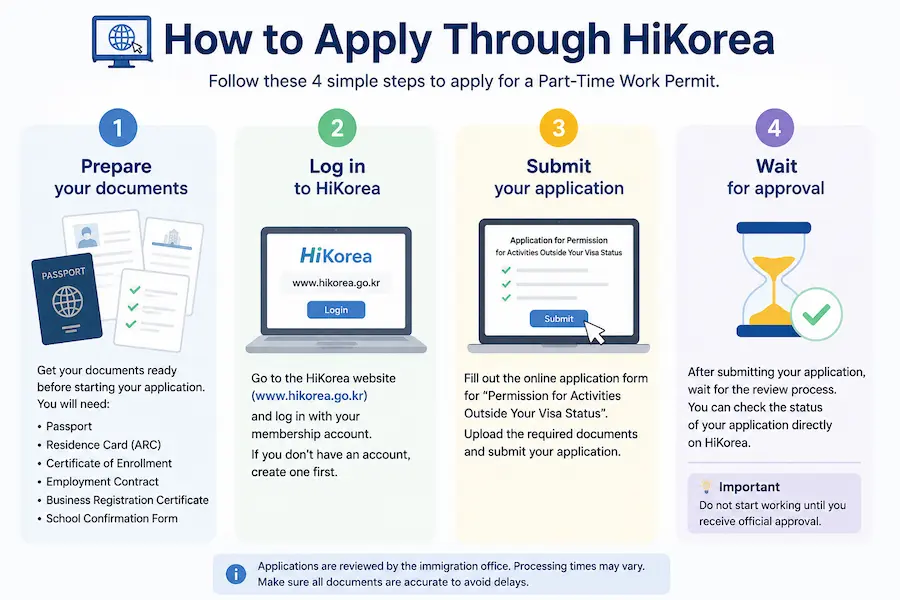
1️⃣ Prepare your documents.
2️⃣ Log in to your HiKorea account.
3️⃣ Submit your application and upload the required documents.
4️⃣ Wait for approval from Korean Immigration.
⚠️ **Do not start working until you receive official approval.**
🔎 Check If You Can Legally Work in Korea
Before accepting a part-time job, it’s worth taking a minute to confirm that you’re legally allowed to work in Korea.
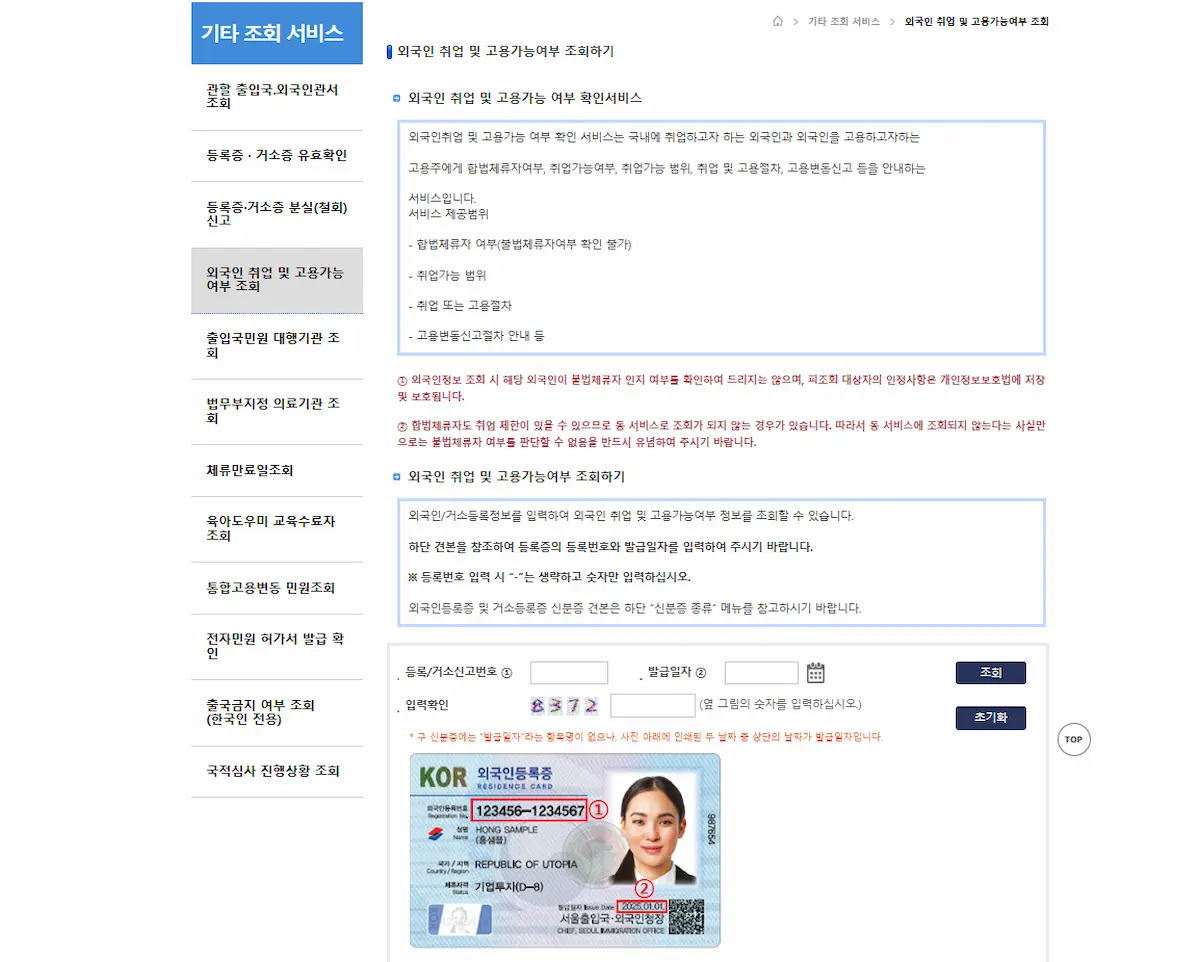
The Foreign Employment Eligibility Verification Service on HiKorea allows both foreign residents and employers to check:
✅ Whether you can legally work in Korea
✅ Your employment eligibility and restrictions
✅ Basic information about employment procedures
What You’ll Need
To use the service, you’ll need:
✅ Your Residence Card (ARC) number
✅ Your Residence Card issue date
Once you enter this information, you can quickly check your employment status online.
💡 Please note: This service is currently easier to access through the Korean version of the HiKorea website, and some users may not be able to find it in the English menu.
Check Your Work Eligibility
🔗 HiKorea Website
🔗 Foreign Employment Eligibility Verification Service (Korean)
A quick eligibility check only takes a few minutes and can help you avoid unnecessary immigration issues before starting a new job.
⚠️ What Happens If You Work Without Permission?
Working without a Part-Time Work Permit can cause serious immigration problems in Korea.
🚨 Do not start working until you receive official approval from Korean Immigration.
Possible Consequences
| Issue | What It Means |
|---|---|
| 💸 Fines | You may face fines or other administrative penalties. |
| 🚫 Visa Restrictions | Future visa extensions or visa changes may become more difficult. |
| 📄 Immigration Record Issues | Unauthorized work can affect future visa applications in Korea. |
| ✈️ Voluntary Departure Request | In some cases, you may be asked to leave Korea voluntarily. |
| ⚠️ Deportation | Serious violations can lead to deportation and future entry restrictions. |
⚠️ Even a few hours of work at a café, restaurant, or convenience store can be considered unauthorized employment if you don’t have the proper permission.
Spending a few minutes getting approval now can save you from much bigger problems later.
💡 Helpful Tips for International Students
Working part-time in Korea can be a great way to gain experience and earn extra income. A few simple precautions can make the process much smoother.
| Tip | Why It Matters |
|---|---|
| ✅ Get approval before you start working. | Working first and applying later is not allowed. |
| 📂 Keep copies of your documents. | It’s helpful to have your permit and paperwork on hand if questions arise. |
| 🎓 Ask your university if you’re unsure. | International offices are usually the best source of guidance. |
| ⏰ Stay within your approved working hours. | Exceeding your permitted hours can create immigration issues. |
| 🔄 Update your information if your job changes. | A new employer or workplace may require additional approval. |
💡 When in doubt, check with your university or HiKorea before accepting a job. A quick confirmation can help you avoid unnecessary problems later.
💰 Do International Students Pay Taxes in Korea?
Yes. In many cases, income from part-time jobs in Korea is subject to income tax and other deductions.
The exact amount can vary depending on:
✅ Your income level
✅ Your employer
✅ Your tax status and visa situation
Don’t be surprised if your first paycheck is slightly lower than expected because of taxes or insurance deductions.
💡 If you’re unsure about any deduction on your payslip, ask your employer or university for clarification.
❓ Frequently Asked Questions
Q. Can I start working while my application is still being processed?
No. You must wait until you receive official approval from Korean Immigration before starting any job.
Q. I changed my part-time job. Do I need to apply again?
Possibly. If your workplace, employer, or job conditions change, you may need to update your permission or submit a new application. Check with your university or HiKorea before starting your new job.
Q. Can I work for two different employers at the same time?
In some cases, yes. However, both jobs must be approved under your work permit, and your total working hours must remain within your permitted limit.
Q. What if my employer asks me to work longer hours?
You should not exceed the number of hours approved by immigration, even if your employer requests it. Working beyond your permitted hours may be treated as unauthorized employment.
Q. Do I need a new permit every semester?
Not necessarily. Requirements can vary depending on your visa status, school, and employment situation. If you’re unsure, it’s best to check with your university’s international office before each semester.
🎯 Final Thoughts
Working part-time in Korea can be a rewarding experience for international students.
Just remember one thing: having a student visa doesn’t automatically mean you can work.
Take the time to understand the rules, get the proper permission, and stay within your approved conditions.
Get approved first, follow the rules, and you’ll be able to enjoy your part-time job in Korea with far fewer worries.
📚 Related Korea Living Guides
New to Korea? These guides can help make everyday life easier:
How to Get a Korea ARC (Residence Card)
How to Open a Bank Account in Korea as a Foreigner
Toss Bank Account for Foreigners: How to Open One in Korea
Korea SIM Card or eSIM? What Foreigners Need to Know Before Arrival